The short answer
- In short
- Write the phrase down by hand, offline, when you set the wallet up. Keep it somewhere private that would survive fire and water, and consider a second copy in another place.
- The catch
- Anyone who sees the words can take everything in the wallet, and no support team can undo it. No legitimate company will ever ask you for the phrase.
- Depends on you
- How far to go depends on the amount. A paper copy in a safe place is enough for a small sum. Larger holdings justify a metal backup and a plan for what happens if you are not around.
What is a seed phrase?
When you set up a wallet it shows you a list of words, usually 12 or 24, drawn from a standard word list. That list is your . Wallet makers also call it a seed phrase, a secret recovery phrase or a mnemonic. They all mean the same thing.
The words encode the private keys for every account in the wallet. Enter them into a compatible wallet and your funds reappear, on any device, anywhere. That makes the phrase a lifeline when a phone breaks, and a prize for a thief.
A private key controls a single account. The phrase generates all of the wallet’s private keys, which is why one phrase restores everything. A PIN or password is different again. It only locks one device or one app.
Write it down by hand, offline
Do it at setup, before you send any money to the wallet. Write the words in order, number them, and check each one against the screen. Most wallets then ask you to confirm a few of the words. Take that step seriously, because one wrong word makes the backup useless.
Keep the phrase out of anything digital
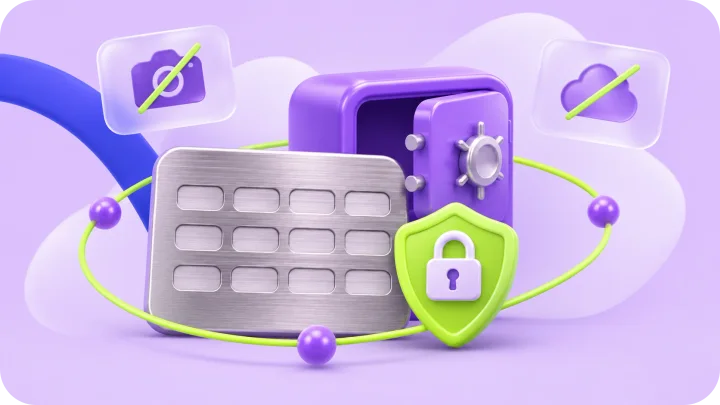
- Photos and screenshots, which sync to cloud accounts
- Notes apps, email drafts and messaging apps
- Printers, which may store what they print
- Any website or form, whatever it claims to be
Seed phrase storage on paper or metal
Paper is a fine place to start. It is cheap, offline and easy to get right. Its weak points are the house fire, the burst pipe and ink that fades over the years. Use a pen that lasts, and keep the sheet in something that protects it from damp.
Metal backups are plates or capsules in which you stamp, engrave or assemble the words. They are built to survive fire and flooding. They cost more and take longer to set up, which is reasonable for an amount you plan to hold for years.
Either way, the material only protects against accidents. It does nothing against someone finding it.
Where to keep it
Think about two threats at once, loss and discovery. A single copy at home is exposed to one fire or one burglary. A copy in a second location, such as a safe deposit box or with someone you trust completely, covers that, at the price of one more place where it could be found.
A sensible setup for most people
- One copy at home, out of sight, in a fireproof container or a safe
- A second copy in a different building
- No label that says what it is
- A note for your family, kept separately, saying that a backup exists and who to ask
Some people split the phrase into parts and store them apart. Done carelessly this makes things worse, because losing one part loses the whole backup. If you want that kind of protection, look at the passphrase or multi-signature features of your wallet before improvising a scheme of your own.
Nobody legitimate will ask for it
A common way to lose a phrase is to hand it over. The request arrives as a support chat, an email about a “wallet upgrade”, a pop-up saying your account must be “verified” or “synchronised”, or a search ad that leads to a copy of a real wallet site.
The rule has no exceptions. You type a recovery phrase in one situation only, when you are restoring your own wallet, in the wallet app or on the device itself, because you decided to. Support staff never need it. Neither does an exchange, an airdrop or a tax tool.
Do not wait to find out. Create a new wallet with a new phrase and move the funds to it straight away. The old phrase can never be made safe again.
Test the backup before you rely on it
A backup you have never tested is only a hope. While the wallet holds little or nothing, reset it or use a second device, restore from your written words and check that the same addresses appear. Then you know the copy is complete and legible.
Look at it again once a year. Paper fades, people move house, and a backup nobody can find is the same as none.
What is a seed phrase?
A list of usually 12 or 24 words that a wallet generates at setup. It encodes the wallet’s private keys, so it can restore the wallet on any compatible device. Recovery phrase and seed phrase mean the same thing.
What is the safest way to store a seed phrase?
Offline, written by hand on paper or stamped into metal, kept somewhere private and protected from fire and water, with a second copy in another location.
Can I keep my recovery phrase in a photo or in the cloud?
It is a frequent way phrases are stolen. Photos and notes sync to online accounts, and anyone who gets into that account gets the wallet.
What is the difference between a private key and a seed phrase?
A private key controls one account. The seed phrase generates all the private keys in a wallet, so it restores every account at once.
What happens if I lose my recovery phrase?
While the wallet still works nothing changes, but you have no backup. Move the funds to a new wallet whose phrase you have recorded properly. If the device is lost as well, the funds cannot be recovered.
Should I ever give my recovery phrase to support?
No. Genuine support never needs it. Anyone who asks is trying to take the funds.
Should I use a seed phrase generator?
No. Your wallet creates the phrase on your own device when you set it up, and that is the only one to use. A website or app that offers to generate a phrase for you, or that sells phrases “with balance”, can keep a copy and take whatever you deposit.
Is a seed phrase 12 or 24 words?
Most wallets use 12 or 24 words, and some offer other lengths. The wallet sets the length when it creates the phrase. Write down every word in order, because a wrong or missing word can leave the backup unusable.
How we research · Educational content, not investment advice. Cryptoassets are high risk and you could lose all the money you invest. Rules and availability vary by country.